
Cathedral Thinking Pt. 1 | “The Client Is Not In a Hurry”
On cathedrals, Claude and chocolate bars.

In 1979, the German philosopher Hans Jonas published Das Prinzip Verantwortung, The Imperative of Responsibility, at precisely the moment capitalism was accelerating in the opposite direction. The book describes the crisis we are in now, written forty-five years before it arrived.
Classical ethics, Jonas observed, were designed for a world of limited human power. That consequences were local, visible, reversible. Modern technology, however, had created a categorically different kind of action. One where decisions whose consequences could extend across generations, affecting people who cannot consent, cannot protest, and cannot hold anyone accountable. His response was a single imperative, to ensure that the consequences of your actions do not foreclose the future.
“The prophecy of doom is to be given greater heed than the prophecy of bliss.”
Jonas was writing about nuclear weapons and environmental destruction. What made him unusual was his insistence on what he called the heuristics of fear. When the downside is catastrophic and irreversible, bad predictions deserve more weight than good ones. The precautionary principle is not timidity, it is the only rational posture when the stakes extend beyond your own time horizon. The burden of proof falls on those who want to proceed, not those who want to stop.
He might have been writing about the week that just ended in Washington.
Word Count: 2014
Reading Time: 7 Minutes
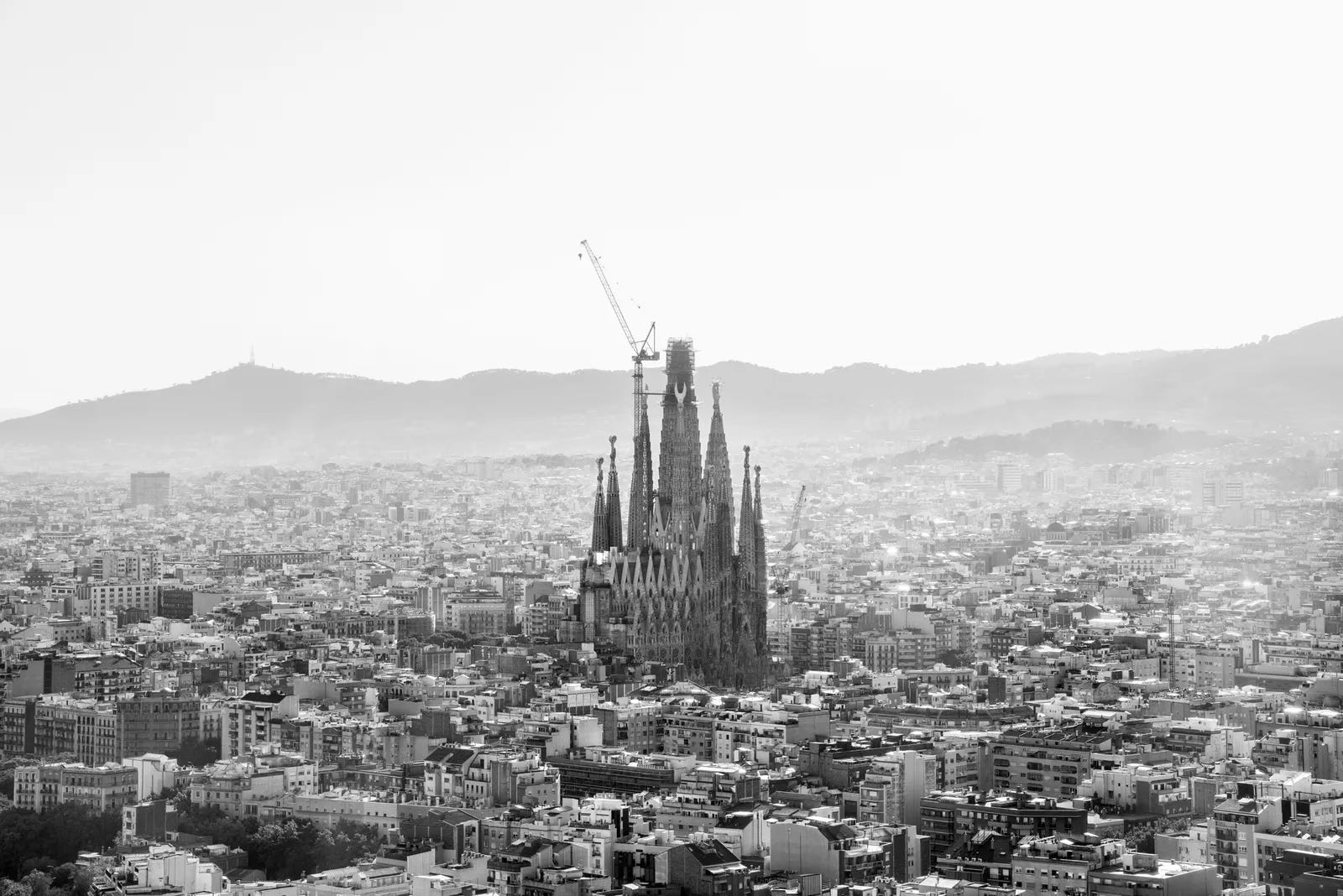
On February 20th, 2026, the same week the Pentagon blacklisted an AI company for refusing to remove its values from a contract, a steel and glass cross was winched into position atop the Tower of Jesus Christ in Barcelona. At 172.5 metres, the Sagrada Família became the tallest church in the world. One hundred and forty-four years after the first stone was laid. Five generations of builders who never saw it finished.
The Sagrada Família is not owned by the Catholic Church, nor by any private beneficiary. It is managed by the Junta Constructora del Temple Expiatori de la Sagrada Família — a non-profit foundation whose sole purpose is the building’s completion and maintenance. Funded not by the state or by patrons but by itself, through donations and the millions of visitors who came each year to watch it being built, it has no shareholder, no exit, and no distinction between its governance and its mission. The cathedral is the product. The commerce and the purpose are the same thing.
When Gaudí took over the project in 1883 he understood immediately that he would not live to see it finished. He didn’t treat this as a limitation. He treated it as a design brief. He deliberately left his blueprints incomplete, trusting that future generations would bring their own intelligence to the structure. He established the Bauhütte, the master builders’ lodge, a self-governing institution with its own rules, its own methods of transmitting knowledge across generations, its own accumulated memory.
When a master builder died, his knowledge didn’t die with him. It lived in the lodge’s documents, its trained apprentices, the building itself. The institution was designed to be more durable than any individual. When asked about his schedule, Gaudí gave the answer that has echoed down 144 years of construction: “My client is not in a hurry.”
The cathedrals of the 21st century are built in the sky. Not in stone but in code. The engineers building today’s most consequential systems expect to exit before the consequences arrive. Height without foundation is not architecture. Stone cathedrals began below ground, in foundations that would never be seen, built first because everything above depended on them.
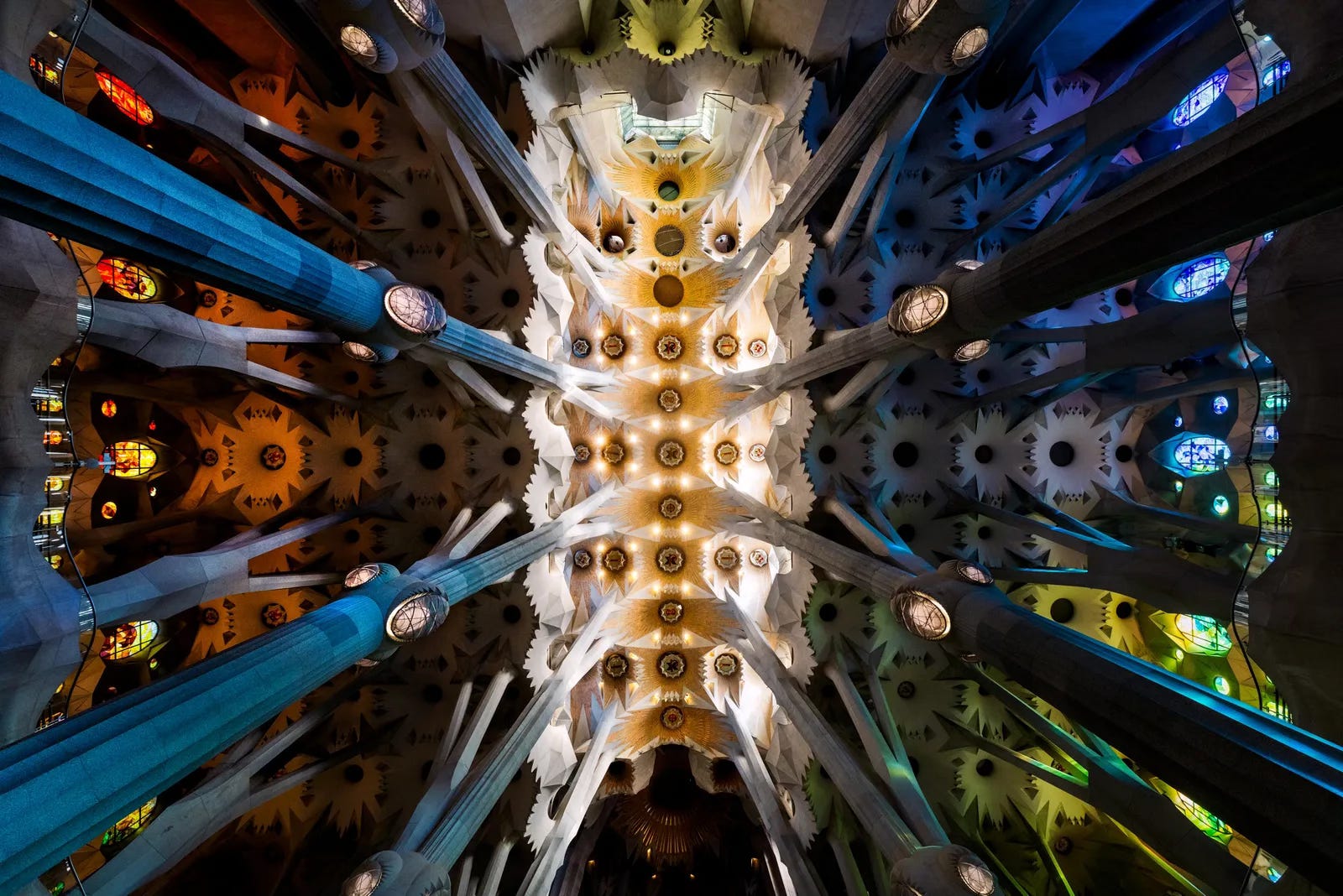
The question worth asking in 2026 is who dares build Cathedrals in stone?
The answer, in a surprising number of cases, turns out to be a charity.
Carlsberg, Novo Nordisk, Robert Bosch, Rolex, IKEA, AP Møller-Mærsk, Bertelsmann, the Tata Group - between them representing hundreds of billions in revenue across brewing, pharmaceuticals, engineering, furniture, shipping, media, and industrial conglomerates - are all majority or entirely owned by foundations whose charters prevent any individual from extracting the underlying value. There is no seller.
The constraint that looks like a limitation is a commitment device. Each founder, at the height of commercial success, made a deliberate choice to make their company structurally indigestible. Not out of distrust exactly, but out of a clear-eyed understanding of what would happen to it under the wrong time horizon. Patagonia completed this same logic in a single afternoon in 2022 when Yvon Chouinard transferred ownership to a purpose structure and declared Earth the company’s only shareholder.
The most instructive case, and the one the Financial Times drew on last week to illuminate OpenAI’s structural risk, is not Danish. It is a chocolate company in Pennsylvania.
In 2002, the trust’s board voted to diversify its assets by selling its controlling stake, financially rational, given their concentration in a single stock. The community saw betrayal. Yard signs went up. Alumni organised. The Pennsylvania Attorney General, then running for governor, petitioned a court on charitable grounds. The sale collapsed.
Milton Hershey built his company, his town, and a boarding school for disadvantaged children around the same founding logic. One where patient capital is in step with both profit and purpose. These ‘enterprise foundations’ encourage directors to prioritise long-term performance over short-term gains.
The Milton Hershey School Trust has controlled Hershey’s chocolate operations for over a century, its proceeds funding an endowment that today exceeds $23 billion. The Wrigley bid was $12.5 billion. Hershey is worth $47 billion today. What looked, in that moment, like catastrophic political interference was an act of value protection so complete it could not even recognise itself.
The Hansmann and Thomsen research across 121 Danish foundation-owned companies found the same pattern at scale. That firms with no shareholder pressure consistently outperformed or matched conventionally owned peers across multiple decades. The absence of the exit option didn’t produce complacency. It produced accountability oriented toward institutional health rather than personal enrichment. When profits are earmarked for something beyond personal consumption, i.e. for science, for art, for children in Pennsylvania, the mission and the commerce become structurally inseparable. The cathedral is the product.
The FT piece asked what a chocolate company can tell us about OpenAI’s risk. The answer lies in the question of who controls these Public Benefit Corporations (PBC’s) and what trust is there to shield directors from short term commercial and political pressures?
Which brings us to the most consequential governance experiment currently running in the most consequential industry of our time.
On January 22nd, 2026, five weeks before the Pentagon blacklisted it, Anthropic published what its engineers had been calling internally a soul document. Formally titled Claude’s Constitution, it runs to 23,000 words. It is less a rule book than a philosophical framework, an attempt to encode not just what Anthropic’s AI should do but why, so that the values generalise into situations no one has yet anticipated.
The dispute that followed was specific. Anthropic wanted two constraints written into its Pentagon contract: no mass domestic surveillance of Americans, no fully autonomous weapons. Not aspirational commitments but contractual requirements, values encoded into architecture rather than culture. The Pentagon found this intolerable. Within 24 hours of Anthropic being designated a supply chain risk, the first time in American history that designation had been applied to an American company, OpenAI had taken its place. The same stated principles, held culturally rather than contractually. Trusting existing law and the relationship rather than structural specificity.
What followed was instructive. Trump called Anthropic “left-wing nut jobs.” Sam Altman, who had publicly declared he shared Anthropic’s red lines, signed the Pentagon deal anyway. He then spent four days amending it under pressure from his own employees, from users switching to Claude in protest, and from legal analysts pointing out that the word “intentionally” in the surveillance clause still left the NSA’s incidental collection doctrine intact. He called the original deal “opportunistic and sloppy.” The contract was rewritten twice. Legal experts remained unpersuaded.
The soul document had worked precisely as designed. The values couldn’t be negotiated away in the room when it became convenient. That made them politically intolerable. At the moment the Pentagon issued the designation, Claude was actively running in Palantir’s Maven Smart System, supporting US military operations in Iran. The institution had been blacklisted. The building was still standing*.
The OpenAI comparison is not a moral judgment. It is an architectural one. Both companies claim the same commitments. Only one of them put them in the contract. Within a week, more than a million people a day were signing up for Claude. The values that made it politically radioactive were the same ones that made it trusted.
This is not a story about left versus right. It is the oldest argument in governance: whether values encoded in structures outlast values held in cultures. The political project currently dismantling oversight bodies and rebranding the Department of Defense as the Department of War is a systematic removal of the load-bearing walls that previous generations built to outlast any single administration. Anthropic’s Long-Term Benefit Trust is the most serious attempt in the AI industry to meet that argument. It is also, by the standards of a 150-year-old industrial foundation, an early prototype. The Carlsberg Foundation has survived two world wars. Anthropic’s trust has not yet survived its first political pressure test.
The question is not which AI company has better values. It is which governance structure will protect those commitments as commercial pressure intensifies, IPOs approach, and the technology becomes more valuable and therefore more subject to capture. Jonas’s answer was unambiguous; when consequences extend across generations and affect people who cannot consent, cultural commitments are not enough. The medieval builders solved this through the lodge. The Danish founders solved it through the charter. The question is whether the builders of artificial intelligence will solve it before the pressure makes doing so inconvenient. The medieval builders understood this. So did Edmund Burke.
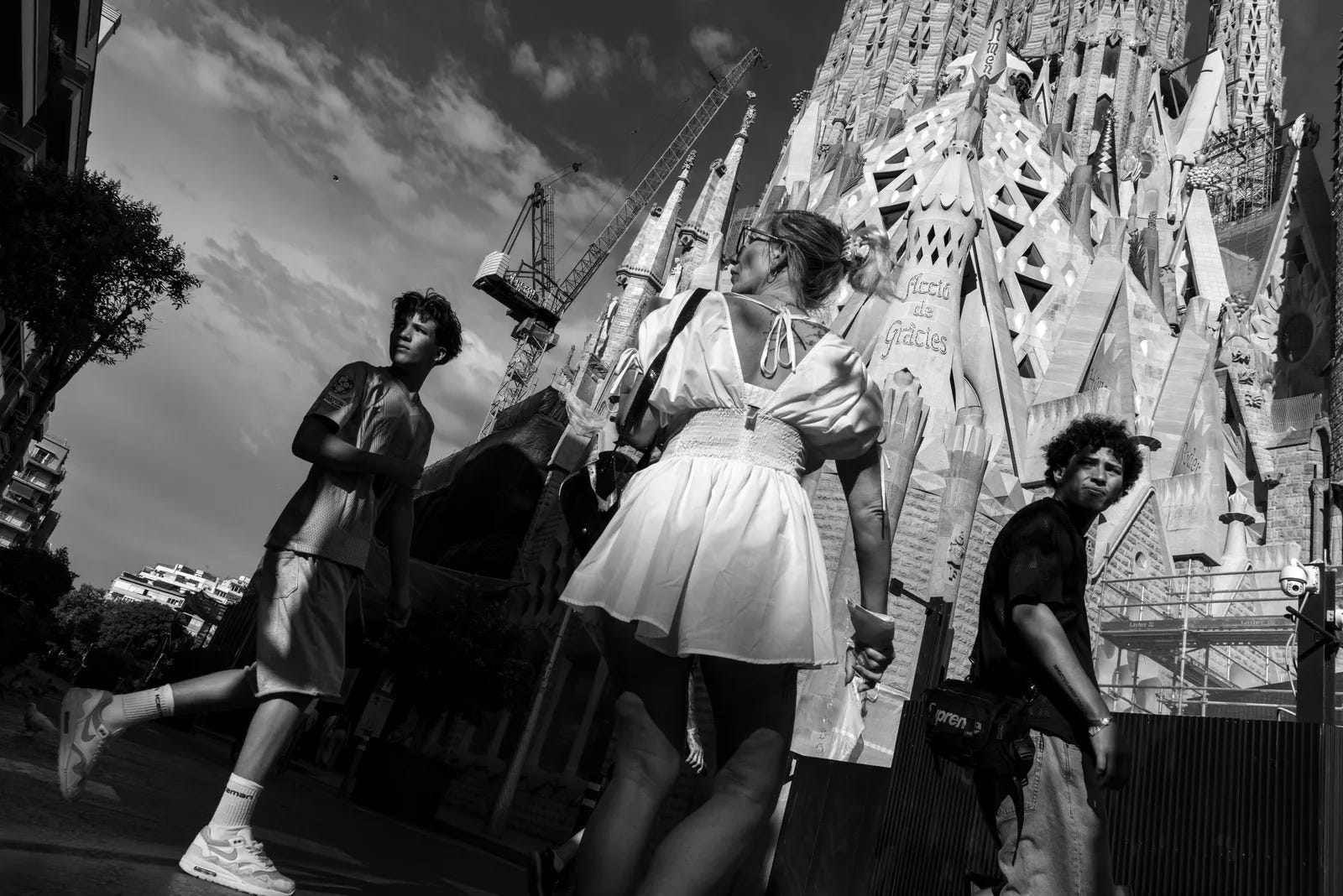
Burke wrote in 1790 that society is a partnership not between the living alone, but between the dead, the living, and those yet to be born. The dead contribute through the institutions they leave behind. The living hold those institutions in trust. The yet unborn have no voice, no vote, no seat at any table, except through the structures that the living choose to build. The foundation charter is the dead founder’s seat at the table. Without it, every decision defaults to the interests of whoever is in the room today.
This is not a moral observation. It is a design problem. The future cannot speak, cannot sue, cannot withdraw its capital. In the absence of a structural proxy, its interests are simply unrepresented, not because decision-makers are selfish, but because the architecture gives them no mechanism to be anything else. Roman Krznaric, in The Good Ancestor, calls this the tyranny of the now.
Cathedral thinking is a governance technology. Not the cathedral itself but the lodge. The building itself is the output. Every structure worth examining in this essay; the foundation charter, the soul document, the constitutional constraint is a version of the Bauhütte. The question worth asking in 2026 is whether we still know how to build one.
The men who laid the first stones of the Sagrada Família in 1882 knew they would never see it finished. They dug the foundations anyway. Jonas called it the imperative of responsibility; that those with the power to shape consequences across generations carry an obligation to the people who cannot yet speak. That is the social contract at its most fundamental, the unwritten one between the present and the future.
Part two examines what this means for brand. The governance structures that protect long-term institutional value turn out to be the same ones that produce genuine brand equity. The lodge, it turns out, is also a brand strategy.
All Images via The NewYorker’s piece on Sagrada Famila here
* At the time of writing at least
Part Two: The Brand as Cathedral.
Love this Garrett 🙌